


Defi News
What is DeFi?
DeFi, or decentralized finance, is one of the biggest things in the blockchain and crypto industry right now. And it’s easy to see why: DeFi provides a variety of financial services that use blockchain technology to cut out middlemen and reduce costs.
How does DeFi work?
Decentralized finance is a new approach to the financial industry and banking. It uses blockchain technology, or what some people call cryptocurrency, and applications called dApps. In this system, transactions are recorded on a blockchain or a ledger of transactions. The secure ledger creates a record that cannot be altered or hacked by third parties and allows multiple users to verify the transactions through consensus.
The chain is a structure that links together the blocks of information it holds. Each block in the chain can hold a certain amount of data and contains an encrypted hash link to the previous block. The data contained in each block cannot be changed or altered, because once a block is completed it cannot be changed and the following blocks are all dependent on its information. This technology provides secure transactions through these permanent links and breaks down data to a manageable size by breaking it into pieces.
Pros of DeFi
The DeFi movement aims at introducing various benefits for customers and investors. Some of the notable advantages of DeFi would include the destruction of negotiators alongside centralized control. With these, one gains more transparency and control, whilst obtaining a decentralized network wherein all entities are granted access to financial services.
DeFi, which is also referred to as decentralized finance and dApp development, is the abstract of blockchain technology, a concept that has developed over time to address issues such as the lack of trust between users. DeFi would allow the creation of decentralized platforms that are designed to help in creating investment opportunities on a sustainable basis.
🔹Convenience
🔹 Security
🔹Autonomy
🔹 Profitability
Cons of Decentralized Finance
While the benefits of DeFi are many, it is important to get a neutral opinion about its cons and drawbacks as well. The majority of problems associated with today’s DeFi projects are generally linked to blockchain and other related technologies. Blockchain’s scalability issues have caused headwinds for the implementation of smart contracts in specific industries like supply chain management. On the other hand, blockchain’s security concerns have also dissuaded many investors from supporting DeFi startups
🔹Limited integration
🔹Poor user experience
🔹Lack of oversight
🔹Volatility and risk
The Future of DeFi
Decentralized finance is growing at a rapid pace with no signs of slowing down. But while the technology behind this innovation is truly fascinating, there are still many aspects lacking when it comes to a complete ecosystem. Current laws were crafted based on the idea of separate financial jurisdictions, each with its own set of laws and rules.
As demand for DeFi grows, concerns arise over who is responsible for investigating financial crimes that occur across borders. Who would enforce the regulations, and how would they enforce them? Other concerns include system stability, energy requirements, carbon footprint and hardware failures.

As DeFi matures, the search for sustainable, market-neutral yield has become increasingly important. While earlier generations of yield protocols often depended on token emissions and...

As real-world asset (RWA) tokenization expands beyond financial instruments and into environmental markets, Sproutly is building an infrastructure designed to connect blockchain technology...

Decentralized finance has always promised a financial system that operates without traditional intermediaries. Smart contracts automate lending, trading, borrowing, staking, and liquidity...

For centuries, lending has depended on one fundamental question: Can I trust the borrower to repay me? Traditional financial institutions answer that question through credit scores,...

Crypto has spent years building faster blockchains, cheaper transactions, decentralized applications, and increasingly sophisticated financial protocols. Yet one of the industry’s...

Artificial intelligence, Web3, scientific research, gaming, and increasingly sophisticated applications all share one critical requirement: compute. For decades, computing power has largely...
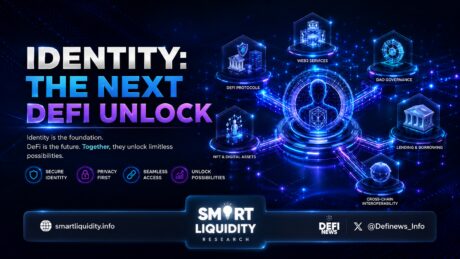
Decentralized finance has transformed how people trade, lend, borrow, and earn without relying on traditional financial intermediaries. Yet one major limitation remains: most DeFi...

For years, blockchain ecosystems competed largely on one question: Which network can attract the most users, developers, and capital? Ethereum built a massive DeFi economy. Solana became...

The idea of a digital nation once sounded like science fiction. Today, governments, businesses, and online communities are increasingly experimenting with digital identities, programmable...

Introduction For centuries, money has served a simple purpose: it stores value, facilitates trade, and acts as a unit of account. Whether in the form of coins, paper bills, or digital bank...

For years, decentralized finance (DeFi) has been marketed as an alternative financial system powered by blockchain technology. Early adopters embraced concepts like self-custody, liquidity...

Application Programming Interfaces (APIs) are the invisible engines powering today’s digital world. From payment processing and weather forecasts to AI models and blockchain data, APIs...

Agriculture has always been the backbone of civilization, feeding billions while supporting the livelihoods of nearly 30% of the global workforce. Yet despite its importance,...

In today’s fast-paced economy, waiting 30, 60, or even 90 days for invoice payments can strain a company’s cash flow. For small and medium-sized businesses (SMBs), delayed...

Impermanent loss has long been one of the biggest challenges facing liquidity providers (LPs) in decentralized finance (DeFi). While automated market makers (AMMs) have revolutionized...

Decentralized Autonomous Organizations (DAOs) were created to replace centralized decision-making with community-driven governance. Token holders propose ideas, vote on changes, and...

Decentralized finance (DeFi) has transformed how people trade, lend, borrow, and earn yield without relying on traditional financial intermediaries. However, as blockchain adoption...

Introduction For years, decentralized finance (DeFi) has been associated with crypto-native users navigating wallets, seed phrases, gas fees, and decentralized exchanges. While this...