DeFi’s Role in a Multi-Chain Financial System
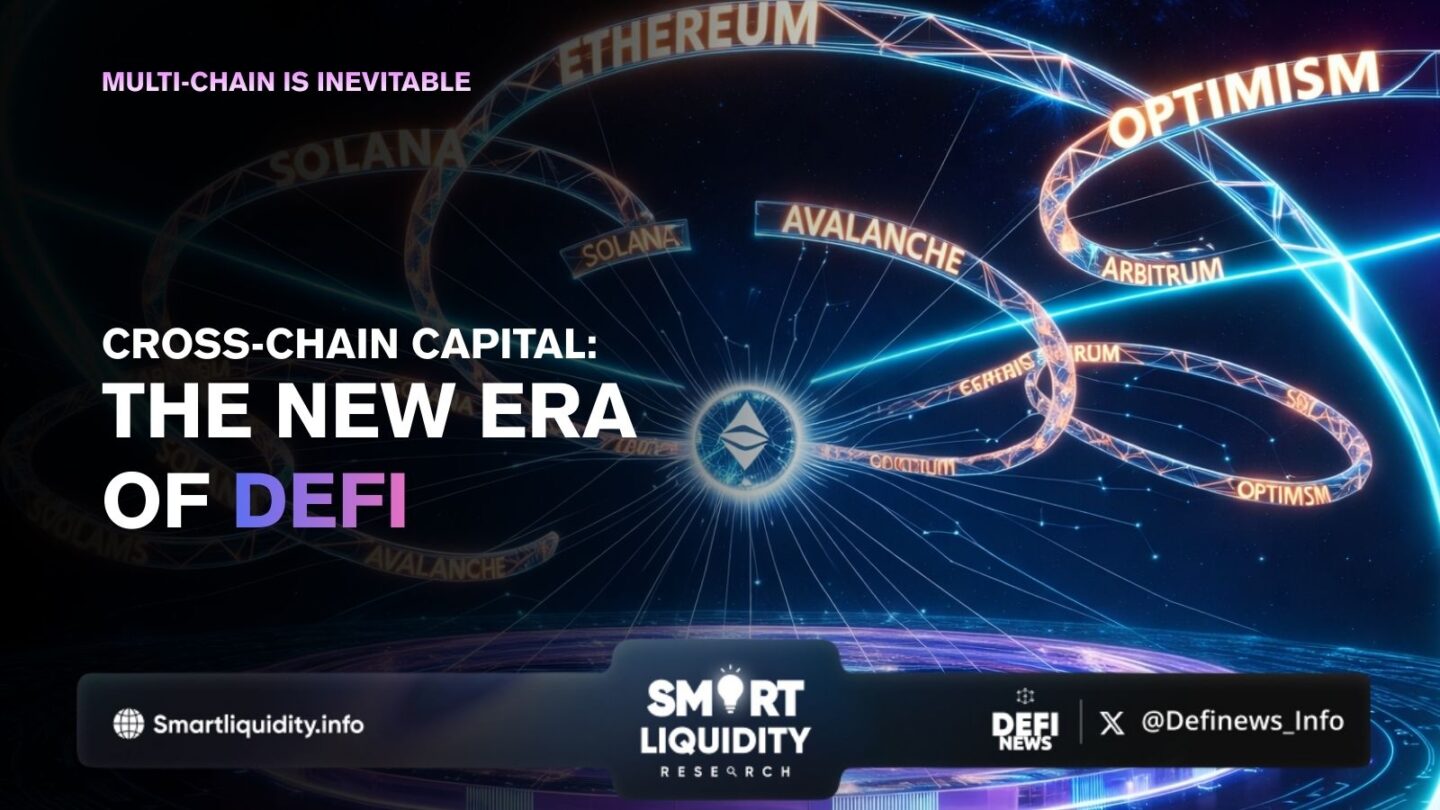
For a while, crypto acted like high school cliques. One chain. One tribe. One ecosystem. But finance doesn’t work that way. Capital moves. Liquidity hunts yield. Users want speed, low fees, and security — not ideology.
Welcome to the multi-chain era.
The Shift From “One Chain to Rule Them All”
Early narratives pushed a single dominant smart contract platform. Then reality happened.
Network congestion
High gas fees
Fragmented liquidity
Scalability ceilings
Today, value flows across ecosystems like:
Ethereum
Solana
Avalanche
Arbitrum
Optimism
Each chain optimizes for something different: decentralization, speed, throughput, cost efficiency, or developer tooling.
No single network can dominate all dimensions at once. And that’s exactly where DeFi becomes critical.
DeFi as the Financial Glue
In a multi-chain world, DeFi acts as infrastructure — not just applications.
It provides:
1. Liquidity Routing
Capital doesn’t stay loyal. It moves toward better yields and incentives. Cross-chain bridges and liquidity layers enable assets to flow between networks, allowing users to deploy capital wherever it’s most productive.
Without DeFi, each chain would be an isolated island. With DeFi, they become connected economic zones.
2. Composability Across Ecosystems
DeFi introduced composability — the “money lego” concept.
In a multi-chain system, this expands further:
A lending protocol on one chain
A DEX aggregator on another
A yield optimizer somewhere else
Wrapped or bridged assets, tying them together
This interconnected design turns separate chains into a distributed financial stack.
3. Risk Diversification
Multi-chain finance reduces systemic concentration risk.
If one chain experiences congestion or technical issues, capital can migrate elsewhere. This flexibility strengthens the overall system, similar to global financial markets operating across jurisdictions.
In traditional finance, markets are interconnected but geographically distributed. DeFi mirrors that model digitally.
4. Specialized Financial Zones
Different chains are becoming financial “specialists”:
High-speed trading environments
Institutional settlement layers
NFT ecosystems
Experimental governance playgrounds
DeFi protocols adapt to each environment’s strengths.
Instead of forcing every activity onto one blockchain, multi-chain DeFi allows specialization without isolation.
The Rise of Cross-Chain Infrastructure
Multi-chain finance would collapse without secure interoperability.
Key components include:
Cross-chain messaging protocols
Asset bridges
Decentralized oracles
Shared liquidity layers
Security remains the biggest challenge. Bridge exploits have historically drained billions. A resilient multi-chain future depends on robust cryptographic verification and minimized trust assumptions.
This is where innovation is accelerating rapidly.
Governance in a Multi-Chain World
As protocols deploy across multiple ecosystems, governance becomes more complex.
Should voting power be unified?
Should token emissions vary by chain?
How are incentives aligned across environments?
DAOs are evolving from single-chain governance systems into cross-chain coordination networks.
The future isn’t just multi-chain liquidity. It’s multi-chain decision-making.
What This Means for the Future of Finance
A multi-chain financial system resembles a digital federation:
Multiple sovereign networks
Shared liquidity
Interoperable assets
Decentralized governance
DeFi is not just a product layer — it is the coordination layer.
It ensures that capital efficiency, innovation, and accessibility are not confined to one ecosystem.
And here’s the strong opinion:
The chains themselves may compete.
But DeFi wins either way.
Because wherever value flows, DeFi builds the rails.
Final Thoughts
The future of crypto finance isn’t maximalist — it’s modular. A multi-chain world enables specialization, resilience, and global access. DeFi transforms fragmented networks into an interconnected financial web.
The result? A permissionless, borderless system where capital moves at the speed of code — not paperwork. And that’s not just evolution. That’s financial infrastructure getting an upgrade.