DeFi in 2026: From Hype Cycles to Financial Infrastructure
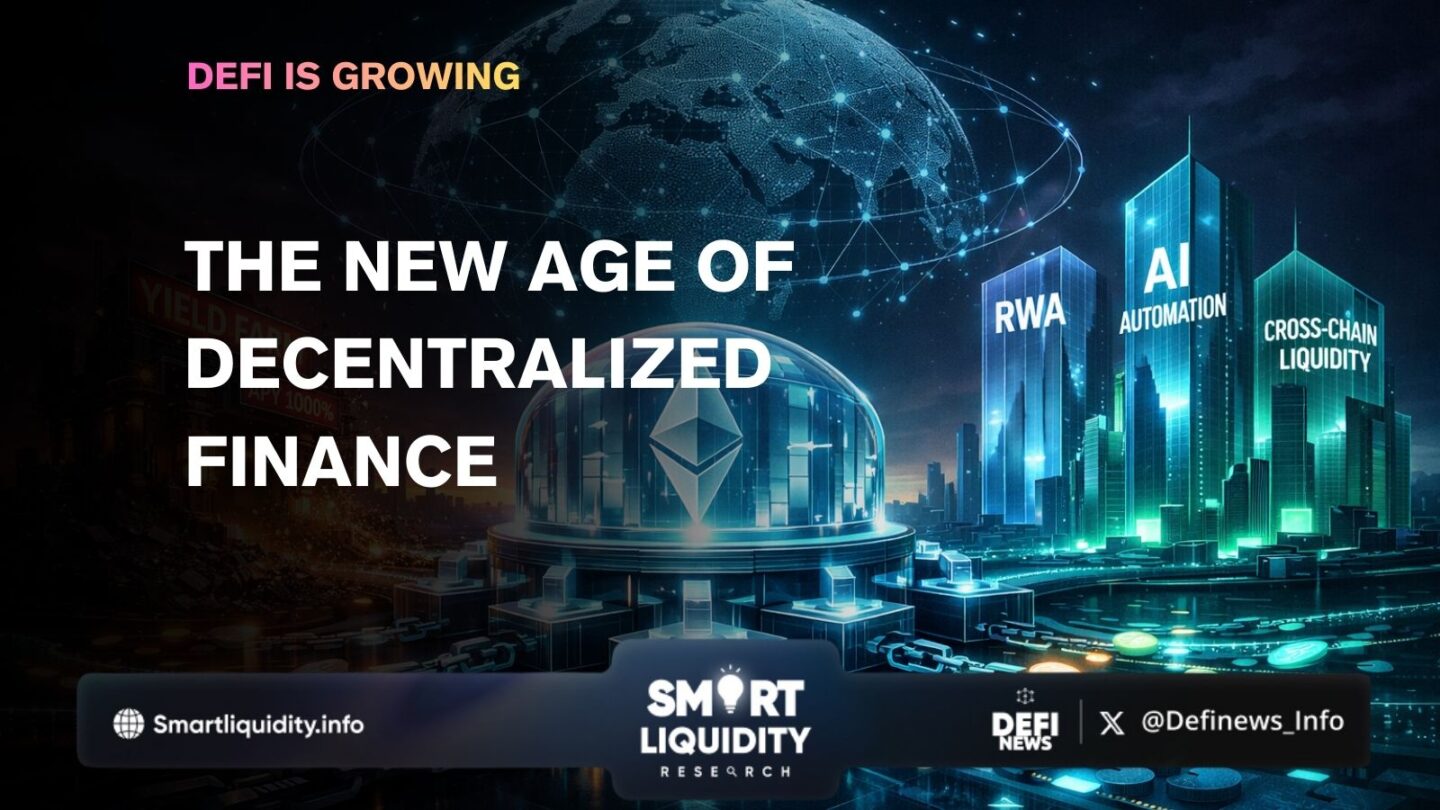
Decentralized finance is no longer in its experimental phase. It’s in its refinement era.
The conversation around DeFi today isn’t about flashy APYs or overnight token pumps. It’s about sustainability, automation, and real-world integration. The market is shifting from speculative excess toward structural resilience — and that shift is defining the latest trend in crypto.
Let’s break down what’s really happening.
The Shakeout: When Weak Protocols Collapse
Every cycle needs a cleansing moment.
The recent collapse of ZeroLend, which saw roughly 98% of its total value locked evaporate, reminded everyone that unsustainable yield models don’t survive market pressure.
TVL crashes are painful, but they serve a purpose. They expose:
Fragile lending structures
Over-leveraged positions
Emission-driven “fake yield.”
Governance without proper risk oversight
Capital in DeFi is becoming more selective. Investors are no longer blindly chasing APY. They’re evaluating fundamentals — revenue models, security architecture, liquidity depth, and real use cases.
In many ways, this is a sign of maturity.
The Rise of Real-World Assets (RWAs)
If one sector is dominating serious conversations, it’s real-world asset tokenization.
Treasury bills, private credit, real estate, and bonds are increasingly being brought on-chain. Unlike traditional yield farming, RWAs introduce external cash flows into DeFi ecosystems.
This changes everything.
Instead of circular crypto-native incentives, protocols can generate yield backed by real-world income streams. That’s a massive leap toward financial legitimacy.
Institutional players are paying attention. Firms like Grayscale Investments continue rebalancing crypto exposure as blockchain-based financial infrastructure evolves. While adoption may not always make headlines, integration is steadily progressing behind the scenes.
RWAs represent a bridge between traditional finance and decentralized networks — and that bridge is getting stronger.
AI Meets DeFi: Automation Becomes the Edge
Another defining trend is the integration of artificial intelligence into DeFi operations.
We’re moving from manual yield farming to AI-driven capital allocation.
Today’s DeFi tools increasingly offer:
Automated yield optimization
Risk-scoring engines
Cross-chain arbitrage execution
Smart portfolio rebalancing
Instead of users jumping between dashboards and chains, intelligent agents can autonomously execute complex strategies.
The impact is significant:
Reduced emotional decision-making
More efficient liquidity deployment
Lower inefficiencies in fragmented markets
Automation isn’t just convenience — it’s becoming a competitive advantage.
Cross-Chain Liquidity Is Becoming Standard
Liquidity fragmentation once slowed DeFi’s growth. Now interoperability is becoming a default expectation.
Users don’t want to think about which chain offers the best yield. They want seamless access.
Cross-chain bridges, aggregators, and modular infrastructure are making capital more fluid across ecosystems. As a result:
Slippage decreases
Arbitrage gaps tighten
User experience improves
The focus is shifting from individual chain dominance to ecosystem-wide liquidity efficiency.
Despite market volatility and protocol failures, foundational networks remain central to DeFi’s evolution.
Ethereum continues to serve as the backbone of decentralized finance, with Layer 2 scaling solutions, staking upgrades, and institutional integrations strengthening its position.
Infrastructure improvements may not create viral headlines, but they create long-term stability.
And stability is what sustainable finance requires.
The Bigger Shift: DeFi Is Growing Up
The DeFi landscape in 2026 looks very different from the frenzy of 2020–2021.
The market is transitioning:
From emissions-based yield to revenue-backed returns
From manual trading to AI-managed automation
From isolated chains to interconnected ecosystems
From speculation-driven hype to infrastructure-driven value
This doesn’t mean volatility disappears. Crypto will always be volatile. But beneath the surface, the architecture is becoming more robust.
The reckless experiments are being filtered out. The protocols with sustainable models are absorbing liquidity. Institutional interest is deepening. Automation is improving efficiency.
DeFi isn’t fading — it’s evolving.
And this phase may be the most important yet.
Because for the first time, decentralized finance is starting to look less like an experiment… and more like the foundation of a parallel financial system.