Blockchain for Digital Nations: Building the Infrastructure of a Borderless Future
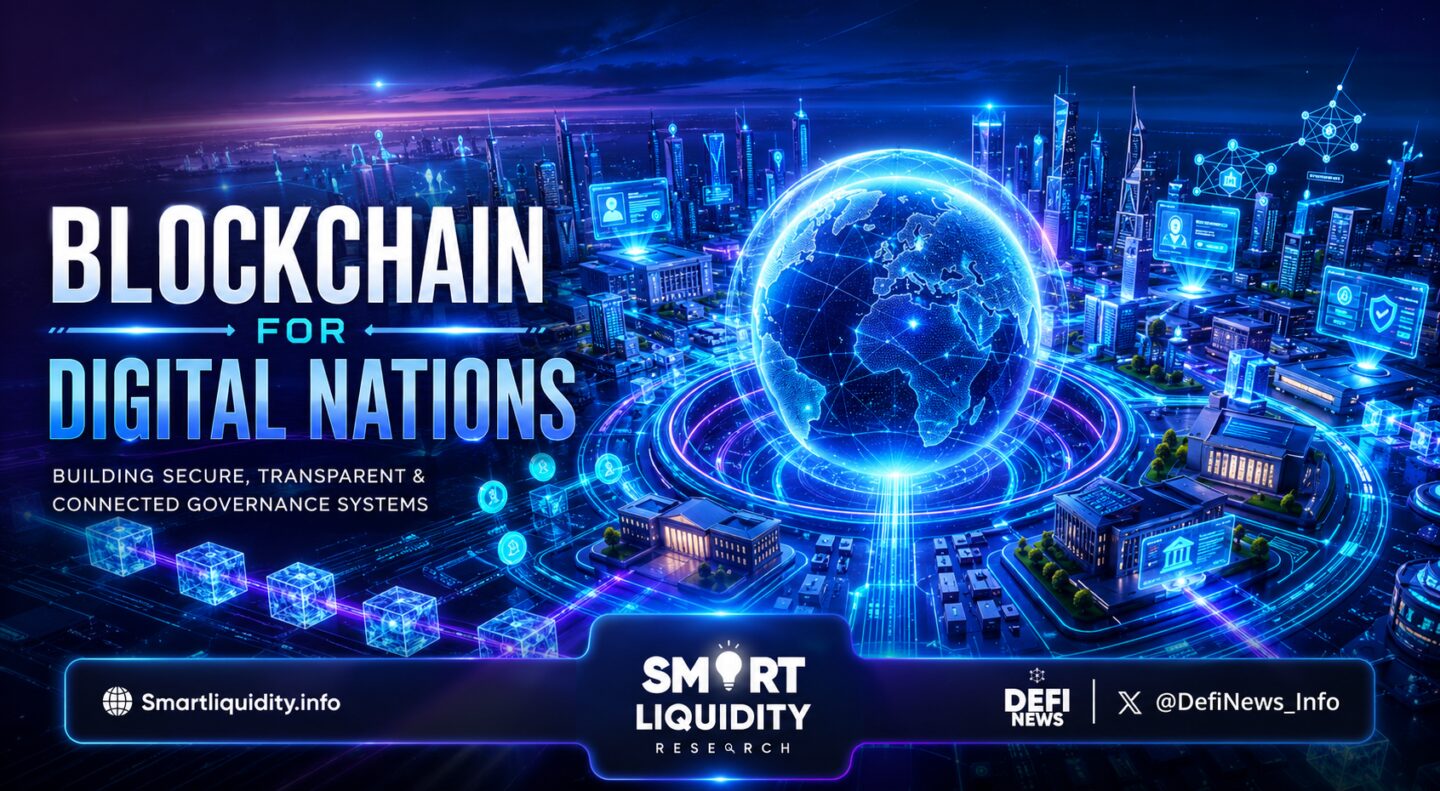
The idea of a digital nation once sounded like science fiction.
Today, governments, businesses, and online communities are increasingly experimenting with digital identities, programmable money, decentralized organizations, and blockchain-based records. As these technologies mature, blockchain could become more than a tool for cryptocurrencies—it could become part of the infrastructure that allows nations to deliver services, manage identities, verify information, and coordinate economic activity in a digital world.
The real question is no longer whether governments will use blockchain.
It is how deeply blockchain could become embedded into the architecture of the modern nation-state.
What Is a Digital Nation?
A digital nation is not necessarily a country without physical territory.
Instead, it is a society where many of the functions traditionally associated with a nation—identity, governance, commerce, records, payments, credentials, and public services—can operate through digital infrastructure.
Imagine being able to:
- Carry a cryptographically verifiable digital identity
- Access government services from anywhere
- Prove ownership without relying on paper documents
- Verify educational or professional credentials instantly
- Receive government payments through programmable digital money
- Vote or participate in governance through secure digital systems
- Move assets across borders without traditional intermediaries
Blockchain can provide an important foundation for these systems because it creates a shared infrastructure for verification, ownership, and coordination.
Blockchain as a Digital Trust Layer
One of the biggest problems facing digital governments is trust.
A digital document can be copied. A database can be altered. A credential can be forged. A centralized platform can experience downtime or become compromised.
Blockchain introduces a different model.
Instead of asking citizens and institutions to trust a single database, blockchain networks can provide cryptographically verifiable records distributed across multiple participants.
This does not make every piece of information automatically true. Instead, it can make certain claims easier to verify.
For example, a university could issue a blockchain-based credential. An employer could independently verify that credential without contacting the university directly.
The blockchain becomes the verification layer, while the institution remains responsible for the underlying claim.
That distinction is critical.
Digital Identity Could Become the Foundation
A functioning digital nation needs a reliable way to answer a basic question:
Who are you?
Traditional identity systems often depend on physical documents, centralized databases, passwords, and government-issued credentials.
Blockchain and decentralized identity systems could create a more flexible model where individuals control cryptographically secured credentials that can be presented when needed.
Instead of revealing an entire identity profile, citizens could potentially prove specific facts.
For example:
“I am over 18.”
without revealing:
“Here is my full identity, address, birth date, and other personal information.”
Zero-knowledge technologies could make this approach even more powerful by allowing someone to prove that a statement is true without revealing the underlying data.
This could transform digital identity from a simple login mechanism into a privacy-preserving layer for digital citizenship.
Government Services Could Become Programmable
Blockchain’s programmability introduces another major opportunity.
Government services today often depend on complicated administrative processes involving forms, databases, approvals, and intermediaries.
Smart contracts could automate certain processes when predefined conditions are satisfied.
Consider a government grant.
Instead of manually processing every stage, a programmable system could:
- Verify eligibility.
- Approve the recipient.
- Lock allocated funds.
- Release payments according to predefined milestones.
- Record the transaction transparently.
- Generate an auditable history.
This doesn’t mean every government function should become a smart contract.
But where rules are clear and repetitive, programmable infrastructure could reduce administrative friction.
Blockchain-Based Public Records
Public records are another natural application.
Property ownership, business registrations, professional licenses, permits, certificates, and other documents require reliable records.
Blockchain could provide tamper-evident histories for these assets and credentials.
A property registry, for example, could maintain a transparent record of ownership transfers while keeping sensitive personal information outside the public ledger.
This could make processes such as property transactions faster and easier to audit.
The important design principle is not putting everything on-chain.
Sensitive information can remain off-chain while blockchain stores proofs, timestamps, permissions, and references that allow authorized parties to verify it.
Digital Money and the Programmable State
Money may become one of the most significant components of digital nations.
Stablecoins, central bank digital currencies, and tokenized deposits are already pushing payments toward programmable infrastructure.
For governments, programmable money could enable more targeted distribution of public funds.
Imagine disaster assistance being distributed digitally and becoming immediately available to verified recipients.
Or infrastructure budgets being released in stages as independently verifiable project milestones are completed.
The same technology could also support automated taxation, cross-border settlements, and government-to-citizen payments.
But programmable money introduces serious questions around privacy and government control.
A digital financial system must balance efficiency with individual financial freedom.
Technology should make payments easier—not turn every transaction into a surveillance mechanism.
Voting and Digital Governance
Governance is another area where blockchain attracts significant attention.
Blockchain-based voting systems could potentially provide verifiable records of ballots while reducing some forms of manipulation.
However, voting is much more complicated than simply putting ballots on a blockchain.
A secure voting system must address:
- Voter privacy
- Coercion
- Identity verification
- Accessibility
- Ballot secrecy
- Device security
- Authentication
- Vote verification
Blockchain can help with some of these problems, but it cannot solve all of them by itself.
The broader opportunity may therefore be verifiable digital governance, rather than simply blockchain voting.
Citizens could use cryptographic credentials to participate in consultations, proposals, community decisions, and decentralized governance systems.
Digital Nations Could Become Borderless Economies
Perhaps the most interesting possibility is that digital nations could operate across traditional geographic boundaries.
A digital community could have:
- Members distributed around the world
- A blockchain-based treasury
- Digital credentials
- Tokenized assets
- Online governance
- Programmable payments
- Shared economic incentives
This begins to resemble a nation in terms of coordination, even though its members may never share the same physical territory.
Decentralized autonomous organizations already demonstrate parts of this concept.
The next evolution could involve communities combining blockchain governance with real-world institutions, businesses, legal structures, and public services.
The result would not necessarily replace traditional countries.
Instead, it could create new layers of digital citizenship and economic participation that exist alongside them.
Blockchain Could Make Governments More Auditable
Transparency is one of blockchain’s strongest potential advantages.
Government spending is often difficult for ordinary citizens to track.
A blockchain-based public finance system could make selected transactions independently verifiable.
Citizens could potentially follow:
Budget → Allocation → Contract → Payment → Project
with each stage producing a verifiable record.
This could make corruption and financial mismanagement easier to detect.
But transparency must be designed carefully.
A completely transparent government ledger could expose sensitive information about individuals.
The goal should therefore be verifiable transparency without unnecessary personal exposure.
The Biggest Challenge: Governance
Blockchain can provide infrastructure.
It cannot decide what society should value.
Who controls the network?
Who can update the rules?
Who resolves disputes?
What happens when a smart contract contains a bug?
How does someone appeal an automated decision?
What happens when a citizen loses access to their private keys?
These are governance questions, not purely technical problems.
A digital nation therefore needs a combination of:
Blockchain + Law + Institutions + Privacy + Human Governance
Technology alone is not enough.
The Risk of Creating Digital Authoritarianism
There is also a darker possibility.
The same infrastructure that can create efficient digital government can create extremely powerful surveillance systems.
If identity, payments, healthcare, mobility, communications, and public services are connected without appropriate safeguards, governments could gain unprecedented visibility into citizens’ lives.
Blockchain does not automatically prevent this.
In fact, an immutable ledger can create new privacy challenges if sensitive information is permanently exposed.
The future of blockchain-based nations must therefore prioritize:
- Privacy by design
- Selective disclosure
- Zero-knowledge proofs
- User-controlled identity
- Strong legal protections
- Open standards
- Transparent governance
- The right to challenge automated decisions
A digital nation should empower citizens—not simply make citizens more trackable.
From E-Government to On-Chain Government
The first phase of digital government was essentially about putting existing processes online.
Forms became websites.
Documents became PDFs.
Government offices became portals.
The next phase could be fundamentally different.
Instead of simply digitizing bureaucracy, blockchain could make government services programmable, interoperable, and independently verifiable.
That means the digital government of the future may not simply be a website citizens visit.
It could become an infrastructure layer that wallets, applications, businesses, institutions, and citizens interact with directly.
What Could a Blockchain-Powered Digital Nation Look Like?
Imagine a citizen opening a digital wallet.
Inside it are cryptographically verifiable credentials representing identity, education, professional qualifications, licenses, and other permissions.
The citizen can selectively share those credentials with businesses or government agencies.
Government benefits arrive through programmable payment infrastructure.
Property ownership is represented through verifiable digital records.
Businesses register and interact with government services through automated systems.
Public spending is auditable.
Citizens participate in digital governance.
And cross-border transactions settle almost instantly.
The result would be a government that operates less like a collection of disconnected databases and more like an interoperable digital network.
The Future Is Not About Putting the Government on a Blockchain
This distinction matters.
The future is unlikely to be:
“Everything must move onto a blockchain.”
Instead, it may be:
“Blockchain becomes one of the trust layers connecting digital society.”
Some information will remain private.
Some databases will remain centralized.
Some decisions will always require humans.
Some services will use traditional infrastructure.
Blockchain’s role may be to connect these systems through verifiable ownership, credentials, transactions, and state changes.
That is a much more realistic—and potentially much more powerful—vision.
Final Thoughts
Digital nations are not necessarily about replacing physical countries.
They are about rethinking how identity, money, governance, ownership, and public services operate in an increasingly digital world.
Blockchain provides something the internet historically lacked: a native infrastructure for verifiable ownership and coordinated state.
Combined with decentralized identity, zero-knowledge proofs, smart contracts, stablecoins, tokenization, and interoperable digital credentials, it could help create governments and digital communities that are faster, more transparent, and more accessible.
But the technology must remain subordinate to the people it serves.
The ultimate measure of a blockchain-powered digital nation will not be how many transactions it processes.
It will be whether citizens gain more control, stronger privacy, better access, and greater trust in the systems that govern their digital lives.
The next generation of nations may still have borders.
But their most important infrastructure could increasingly exist on-chain.