DeFi for Agricultural Finance: Cultivating the Future of Farming Through Decentralized Finance
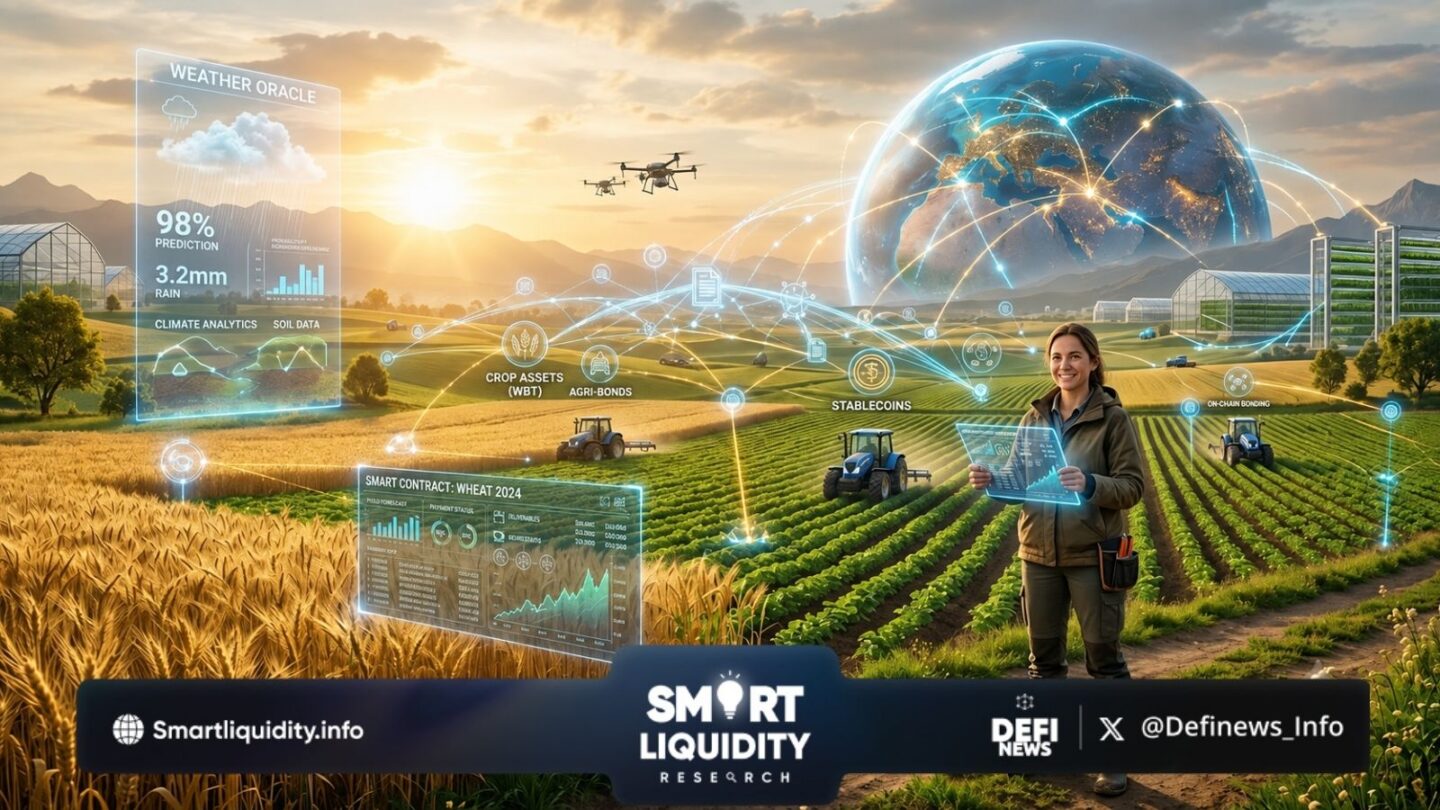
Agriculture has always been the backbone of civilization, feeding billions while supporting the livelihoods of nearly 30% of the global workforce. Yet despite its importance, farmers—especially smallholder farmers—continue to face significant financial challenges. Limited access to credit, expensive intermediaries, slow cross-border payments, and lack of insurance often prevent agricultural businesses from reaching their full potential.
Enter Decentralized Finance (DeFi)—a blockchain-powered financial ecosystem that removes traditional intermediaries and enables transparent, permissionless financial services. While DeFi is commonly associated with cryptocurrency trading and lending, its potential extends far beyond digital assets. One of its most promising frontiers is agricultural finance, where blockchain technology could revolutionize how farmers access capital, manage risk, and participate in global markets.
As climate change, food security, and financial inclusion become increasingly urgent global issues, DeFi may offer the infrastructure needed to build a more resilient agricultural economy.
The Financial Challenges Facing Farmers
Agriculture is inherently risky. Farmers depend on weather conditions, fluctuating commodity prices, disease outbreaks, and seasonal income. Unfortunately, traditional financial institutions often view agriculture as a high-risk sector, resulting in:
- Limited access to affordable loans
- High interest rates
- Excessive paperwork
- Long approval processes
- Lack of collateral for smallholder farmers
- Expensive crop insurance
- Delayed international payments
In many developing countries, millions of farmers remain unbanked, making it difficult to secure financing needed for seeds, fertilizer, equipment, or irrigation.
What is DeFi?
Decentralized Finance, or DeFi, is a financial ecosystem built on blockchain networks using smart contracts instead of centralized institutions. Rather than relying on banks, DeFi platforms allow users to borrow, lend, trade, insure assets, and earn yield directly through decentralized protocols.
Key characteristics include:
- Permissionless access
- Transparent transactions
- Global availability
- Programmable financial products
- Lower transaction costs
- 24/7 accessibility
For agriculture, these features create opportunities to remove long-standing financial barriers.
How DeFi Can Transform Agricultural Finance
1. Permissionless Lending for Farmers
Traditional agricultural loans often require credit history, land titles, or extensive documentation. Many small-scale farmers simply cannot meet these requirements.
DeFi lending platforms could enable farmers to access capital through blockchain-based lending pools where lenders earn yield while borrowers receive funding more efficiently.
Potential benefits include:
- Faster loan approvals
- Reduced administrative costs
- Global liquidity access
- Transparent lending terms
- Fractional financing
Future innovations may incorporate decentralized identity systems and on-chain farming records to improve credit assessment without relying solely on conventional collateral.
2. Tokenizing Agricultural Assets
One of blockchain’s most innovative features is asset tokenization.
Real-world agricultural assets can potentially be represented as digital tokens, including:
- Crop inventories
- Grain storage
- Coffee harvests
- Livestock
- Farmland ownership
- Agricultural equipment
Tokenization enables fractional ownership, making agricultural investments accessible to a broader range of investors while allowing farmers to unlock liquidity without selling their entire assets.
3. Decentralized Crop Insurance
Weather remains one of agriculture’s greatest uncertainties.
Traditional insurance claims may take weeks—or even months—to process.
Blockchain-based insurance powered by smart contracts can automatically execute payouts when predefined conditions are met.
For example:
- Rainfall falls below a specified threshold.
- Temperature exceeds critical levels.
- Flood data reaches predefined limits.
Using trusted data sources (oracles), farmers could receive automatic compensation without lengthy claim investigations.
This automation reduces operational costs while improving trust and efficiency.
4. Stablecoins for Agricultural Payments
Farmers frequently face payment delays, particularly in international trade.
Stablecoins offer a faster alternative for:
- Export payments
- Supplier settlements
- Equipment purchases
- Cross-border remittances
Instead of waiting several days for international bank transfers, blockchain transactions can settle within minutes while maintaining lower fees.
For farmers operating in regions with volatile local currencies, stablecoins may also provide greater financial stability.
5. Supply Chain Transparency
Consumers increasingly want to know where their food comes from.
Blockchain technology allows every stage of agricultural production to be recorded immutably.
Information can include:
- Farm origin
- Harvest dates
- Transportation records
- Storage conditions
- Certifications
- Quality inspections
Combined with DeFi, this transparency could enable financing tied directly to verified production milestones, reducing fraud and improving trust among buyers, suppliers, and lenders.
6. Yield Farming Beyond Crypto
The concept of “yield” takes on a new meaning in agriculture.
Future DeFi protocols may allow investors to fund seasonal farming operations in exchange for a portion of harvest profits.
Instead of speculative investments alone, capital could directly support food production while offering returns linked to agricultural performance.
Although still an emerging concept, such models could create entirely new financing mechanisms for rural economies.
Real-World Applications
Several blockchain initiatives are already exploring agriculture-focused financial services:
Supply Chain Financing
Blockchain improves visibility into agricultural supply chains, enabling lenders to provide financing with greater confidence.
Carbon Credit Markets
Farmers practicing sustainable agriculture can tokenize verified carbon credits and sell them on decentralized marketplaces.
Weather Data Integration
Smart contracts connected to trusted weather oracles enable automated insurance and risk management products.
Commodity Tokenization
Agricultural commodities such as wheat, rice, coffee, and cocoa could eventually be represented as digital assets for trading and financing.
Benefits of DeFi in Agriculture
The integration of decentralized finance into agriculture offers several advantages:
Greater Financial Inclusion
Farmers without traditional banking relationships may gain access to financial services using only a smartphone and internet connection.
Lower Costs
Removing intermediaries can reduce transaction fees, lending costs, and administrative overhead.
Faster Transactions
Loans, insurance payouts, and international payments can settle significantly faster than conventional financial systems.
Transparency
Immutable blockchain records reduce fraud while improving accountability across agricultural supply chains.
Global Investment Opportunities
Investors worldwide may gain exposure to agricultural assets without geographic limitations.
Challenges That Must Be Addressed
Despite its promise, DeFi adoption in agriculture faces important hurdles.
Regulatory Uncertainty
Many jurisdictions are still developing legal frameworks for tokenized assets and decentralized finance.
Internet Accessibility
Reliable internet access remains limited in many rural farming communities.
Digital Literacy
Farmers need education and user-friendly tools to safely interact with blockchain technology.
Oracle Reliability
Smart contracts depend on accurate external data. Reliable oracle infrastructure is essential for insurance and financing applications.
Volatility
While stablecoins help reduce cryptocurrency price fluctuations, broader crypto market volatility remains a consideration for DeFi ecosystems.
The Road Ahead
The future of agricultural finance may lie in combining blockchain technology, decentralized finance, artificial intelligence, satellite imagery, and IoT sensors into integrated financial ecosystems.
Imagine a future where:
- AI predicts crop yields.
- Satellite data verifies farm conditions.
- Smart contracts automatically issue loans.
- Weather events trigger instant insurance payouts.
- Harvests are tokenized and financed globally.
- Carbon credits generate additional income for sustainable farming.
This vision represents a more connected, transparent, and inclusive agricultural economy.
Conclusion
Agriculture feeds the world, yet millions of farmers remain underserved by traditional financial systems. Decentralized Finance offers a compelling alternative by expanding access to capital, streamlining payments, enabling programmable insurance, and increasing transparency across supply chains.
While challenges around regulation, infrastructure, and adoption remain, the convergence of DeFi and agriculture has the potential to reshape rural finance and strengthen global food systems. By leveraging blockchain technology, farmers could gain greater financial independence, investors could discover new opportunities, and agricultural markets could become more resilient and efficient.
As DeFi continues to evolve beyond digital assets, agricultural finance stands out as one of its most impactful real-world applications—one that could help cultivate a more sustainable and financially inclusive future.