DeFi Is Just Money Lego and Humans Are Already Optional
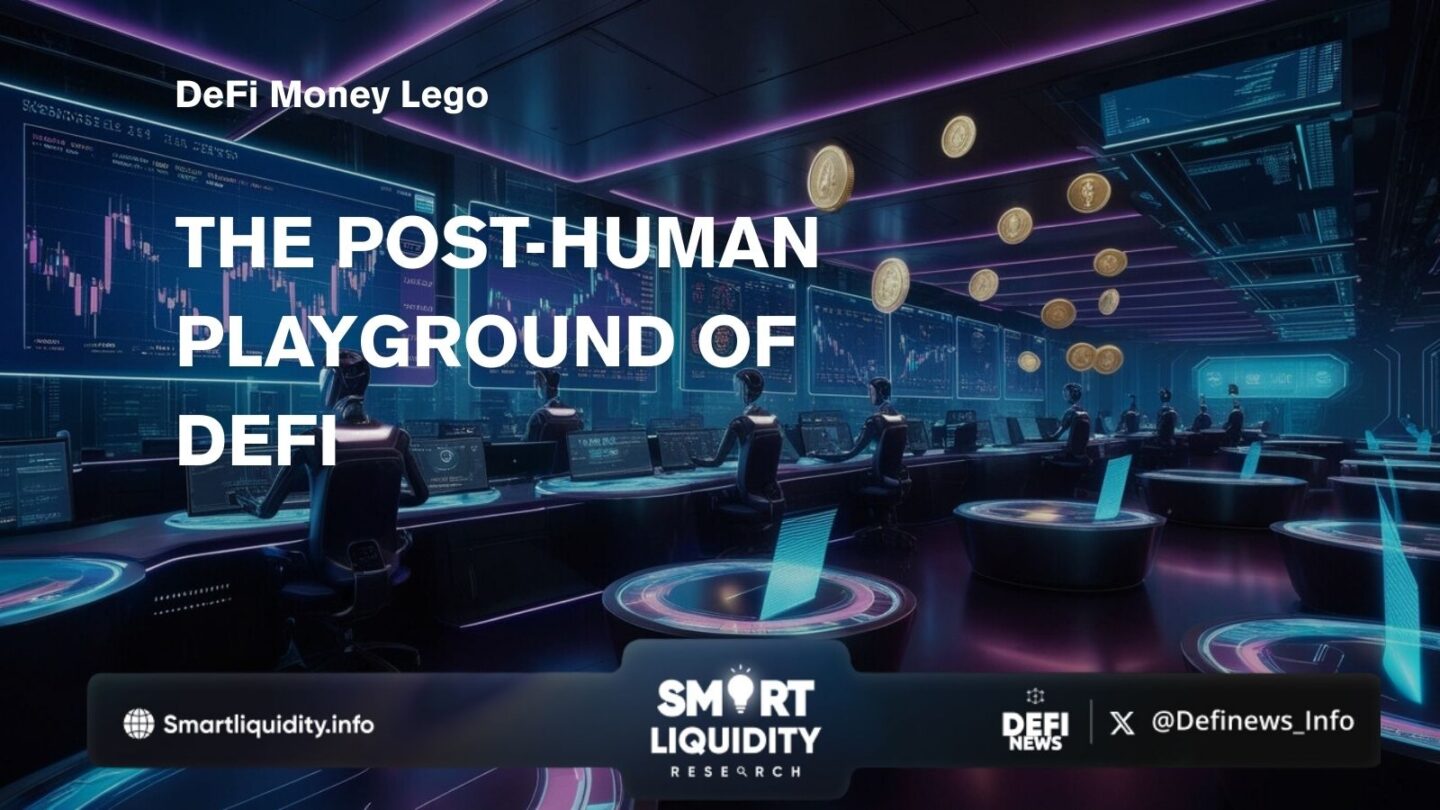
DeFi is Money Lego.
Composable, permissionless, stackable financial primitives that snap together like plastic bricks.
Now here’s the less cute part:
Most of the hands snapping those bricks together aren’t human anymore.
Money, Lego Was Never Meant to Be Played With Slowly
In traditional finance, building a financial product takes:
- Lawyers
- Banks
- Regulators
- Months (or years)
- A small forest of paperwork
In DeFi, you:
- Deploy a smart contract
- Plug it into another protocol
- Wrap the output token
- Use that as collateral somewhere else
- Repeat until Twitter calls it “innovative” or “irresponsible.”
No permission. No gatekeepers. Just code talking to code.
That’s the Lego part. The dangerous part is the speed.
DeFi Fired the Humans First
Here’s the quiet reality no one likes to say out loud:
- Arbitrage? Bots.
- Liquidations? Bots.
- MEV extraction? Bots.
- Yield optimization? Bots.
- Risk management? Increasingly… bots.
Humans are bad at:
- Millisecond decision-making
- 24/7 vigilance
- Emotional neutrality during volatility
Smart contracts don’t panic.
Agents don’t sleep.
And neither care about your “long-term conviction.”
Most retail users aren’t using DeFi — they’re providing liquidity for machines to exploit inefficiencies faster than any human ever could.
Congrats. You’re the map. The bots are the territory.
Composability Is a Superpower… and a Fragility
The same composability that makes DeFi magical also makes it fragile.
One protocol breaks →
Cascades into another →
Triggers liquidations →
Spikes volatility →
Everyone blames “market conditions,” but that explains anything.
This isn’t a bug. It’s the system working exactly as designed.
DeFi doesn’t fail gracefully.
It fails spectacularly and instantly.
The Real Structural Shift: AI + DeFi
Here’s where things stop being funny and start being important.
When AI agents manage capital:
- They don’t revenge trade
- They don’t FOMO
- They don’t chase narratives
They optimize for objectives:
- Execution precision
- Liquidity efficiency
- Risk-adjusted return
At that point, DeFi stops being a playground for degens and starts looking like open-source financial infrastructure — the kind institutions quietly love once compliance wrappers exist.
Not memes.
Not “APY screenshots.”
Actual utility.
The Biggest Risk Isn’t Code — It’s Liquidity + Regulation
Smart contract risk gets all the headlines, but the real danger is simpler:
- Volatility doesn’t disappear — it mutates
- Regulation moves more slowly than markets but hits harder
- Macro liquidity shifts faster than humans can react
In a fully composable, agent-driven system, price shocks propagate like electricity. Clean, fast, unforgiving.
Leveraged perps used to be scary.
Autonomous capital reacting to global liquidity in real time is scarier.
So… Is DeFi Fun?
Yes.
It’s Money Lego.
But it’s also:
- A live experiment in automated finance
- A preview of post-human market participation
- A system where efficiency slowly squeezes out intuition
We’re not early anymore.
We’re just early enough to still pretend we’re in control.
And that might be the funniest fact of all.