Embedded DeFi in Everyday Apps: The Future of Finance Is Invisible
Introduction
For years, decentralized finance (DeFi) has been associated with crypto-native users navigating wallets, seed phrases, gas fees, and decentralized exchanges. While this ecosystem has unlocked billions of dollars in value, mainstream adoption has remained limited because the experience is often too technical for everyday users.
That is beginning to change.
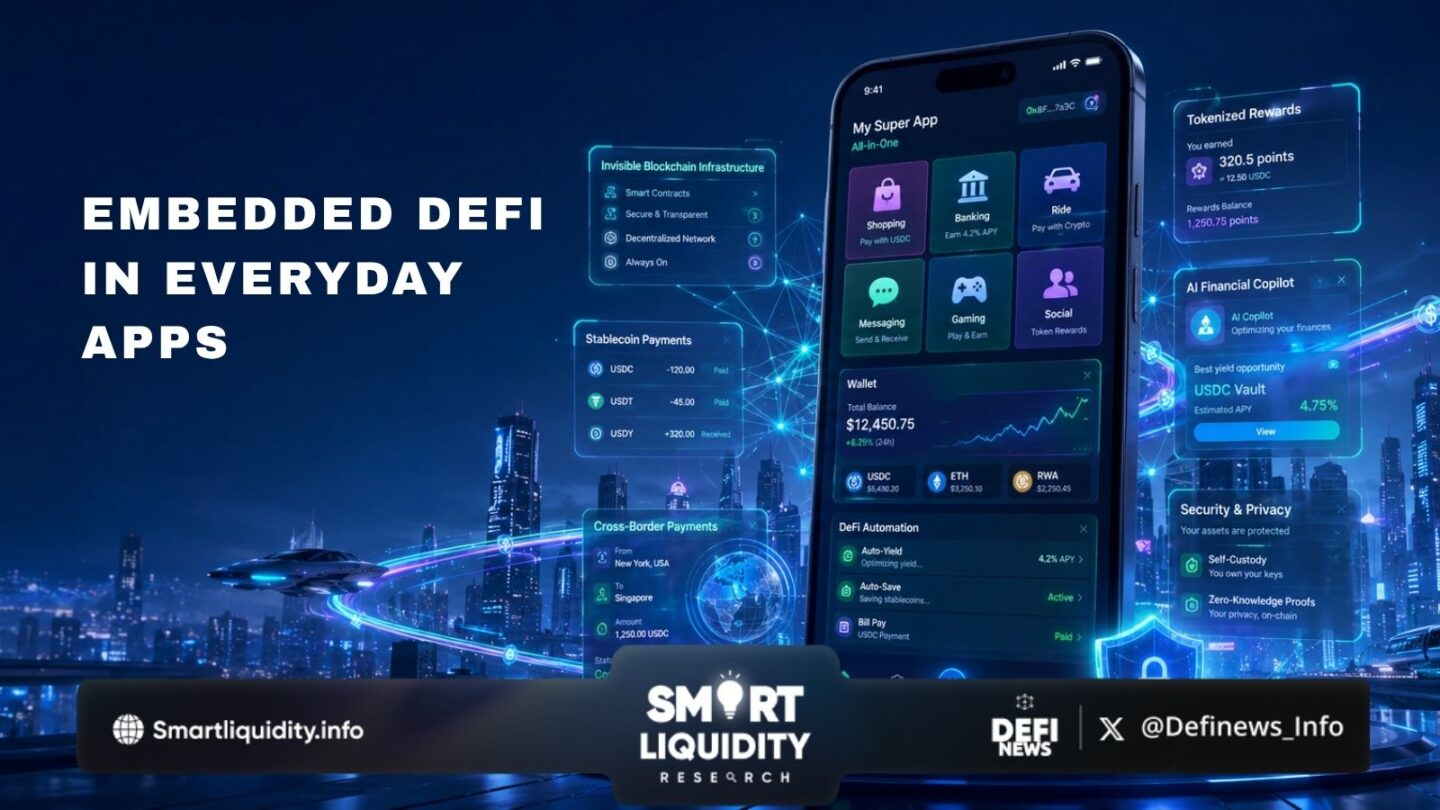
The next evolution of DeFi isn’t about creating more standalone crypto apps—it’s about embedding decentralized financial services directly into the applications people already use. Whether it’s social media, e-commerce, gaming, ride-sharing, messaging platforms, or digital banking, embedded DeFi is transforming blockchain from a visible product into invisible infrastructure.
Just as most people use the internet without thinking about TCP/IP or DNS, future users may access DeFi every day without even realizing blockchain is powering the experience.
What Is Embedded DeFi?
Embedded DeFi refers to integrating decentralized financial services seamlessly into non-crypto applications.
Instead of requiring users to:
- Download a crypto wallet
- Purchase cryptocurrency separately
- Connect to decentralized applications
- Understand blockchain mechanics
Applications can provide financial services directly within familiar interfaces.
Examples include:
- Instant stablecoin payments inside shopping apps
- Tokenized rewards in food delivery platforms
- Yield-generating savings in digital banking apps
- Crypto-backed loans inside fintech applications
- Blockchain-powered loyalty programs
- Cross-border payments in messaging apps
The blockchain operates quietly behind the scenes while users simply enjoy better financial experiences.
One of crypto’s biggest challenges has never been technology—it has been usability.
Most consumers don’t want to learn:
- Gas optimization
- Private key management
- Wallet connections
- Token bridges
- Network switching
They simply want financial products that are:
- Fast
- Cheap
- Secure
- Reliable
Embedded DeFi removes complexity while preserving the advantages of decentralization.
This shift dramatically lowers the barrier to entry for millions of new users.
Everyday Applications Already Moving Toward Embedded Finance
Digital Banking
Many fintech companies are beginning to explore blockchain rails for:
- International transfers
- Stablecoin settlements
- Yield-bearing accounts
- Programmable payments
Users interact with familiar banking interfaces while blockchain improves efficiency underneath.
E-Commerce
Online stores can integrate DeFi-powered payment systems that offer:
- Near-instant settlements
- Lower transaction fees
- Global payment acceptance
- Automatic escrow
- Smart contract refunds
Customers enjoy faster checkout while merchants reduce payment costs.
Gaming
Modern blockchain games are moving away from speculative NFTs toward practical financial utilities.
Players can:
- Own in-game assets
- Trade items securely
- Borrow against digital collectibles
- Earn rewards automatically
- Receive revenue-sharing distributions
Financial services become part of gameplay rather than separate experiences.
Social Media
Creators can receive:
- Instant global tips
- Revenue sharing
- Tokenized memberships
- Subscription payments
- Community rewards
Instead of relying entirely on advertising revenue, creators gain direct monetization through decentralized payment rails.
Travel
Imagine booking hotels, flights, or transportation with stablecoins while receiving tokenized cashback automatically.
Smart contracts can also simplify:
- Insurance claims
- Refund processing
- Loyalty rewards
- Cross-border payments
Travel becomes faster and more transparent.
Stablecoins Make Embedded DeFi Possible
Stablecoins have become one of blockchain’s most practical innovations.
Unlike volatile cryptocurrencies, stablecoins maintain relatively stable values, making them suitable for everyday financial activity.
They enable:
- Payroll
- Merchant payments
- International remittances
- Subscription billing
- Treasury management
- Consumer savings
Because prices remain stable, businesses are increasingly comfortable integrating blockchain-based payment systems.
Stablecoins are becoming the financial foundation of embedded DeFi.
AI and Embedded Finance
Artificial intelligence makes embedded DeFi even more powerful.
Imagine AI assistants that automatically:
- Optimize savings
- Find better lending rates
- Rebalance investments
- Pay recurring bills
- Detect fraud
- Execute transactions securely
Rather than manually managing finances, users receive intelligent financial automation powered by decentralized infrastructure.
Challenges Ahead
While the future looks promising, embedded DeFi still faces important challenges.
Regulatory Compliance
Financial regulations differ across countries, requiring platforms to balance decentralization with legal requirements.
User Security
Wallet recovery, identity protection, and fraud prevention remain essential for mainstream adoption.
Scalability
Applications serving millions of users require blockchain infrastructure capable of handling massive transaction volumes with low fees.
Interoperability
Different blockchains must communicate efficiently to create seamless user experiences.
Cross-chain technologies continue to improve this capability.
The Road Ahead
The future of DeFi is likely to be defined less by standalone crypto platforms and more by invisible integration into the apps people use every day.
Instead of asking users to adapt to blockchain, developers are bringing blockchain to users in familiar, intuitive ways. This shift has the potential to accelerate global adoption by making decentralized finance accessible without requiring technical expertise.
As stablecoins, scalable blockchain networks, account abstraction, and AI continue to mature, embedded DeFi could become the standard financial layer beneath digital experiences—from shopping and gaming to social media and international payments.
The most successful blockchain products of the next decade may not be the ones with the most visible crypto features, but the ones where users never have to think about blockchain at all.
Conclusion
Embedded DeFi represents a major step toward mass adoption by hiding complexity while preserving the benefits of decentralized finance. Instead of asking users to navigate wallets, bridges, and gas fees, future applications will quietly deliver faster payments, smarter savings, global access, and programmable financial services within the apps people already trust.
The future of finance isn’t just decentralized—it’s seamlessly embedded into everyday digital life. When blockchain becomes invisible and financial experiences become effortless, DeFi will move beyond a niche technology and become an essential part of how the world interacts with money.