


Tag "#DecentralizedFinance Archives - Smart Liquidity Research"

Decentralized finance has always promised a financial system that operates without traditional intermediaries. Smart contracts automate lending, trading, borrowing, staking, and liquidity...

For centuries, lending has depended on one fundamental question: Can I trust the borrower to repay me? Traditional financial institutions answer that question through credit scores,...
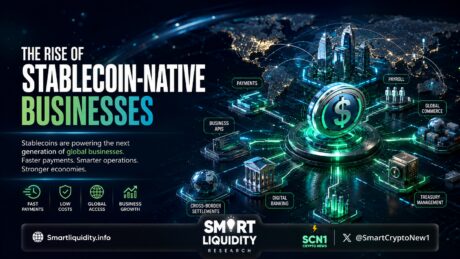
For years, stablecoins were treated mainly as a safe harbor inside the volatile crypto market—a way to move between trades without converting back to traditional currency. That perception...
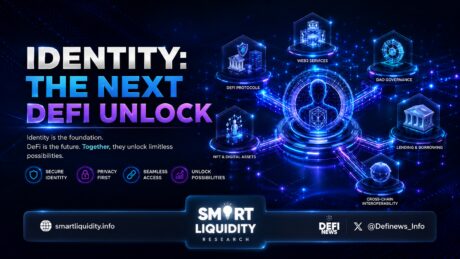
Decentralized finance has transformed how people trade, lend, borrow, and earn without relying on traditional financial intermediaries. Yet one major limitation remains: most DeFi...
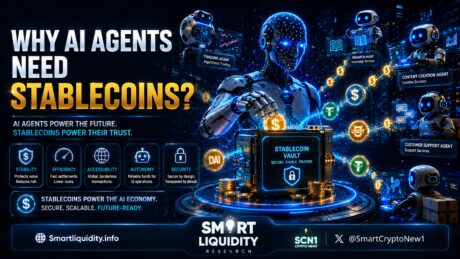
Artificial intelligence is moving beyond chatbots and copilots. The next generation of AI systems is increasingly capable of acting on behalf of users—searching for information, purchasing...

For years, blockchain ecosystems competed largely on one question: Which network can attract the most users, developers, and capital? Ethereum built a massive DeFi economy. Solana became...

Introduction For centuries, money has served a simple purpose: it stores value, facilitates trade, and acts as a unit of account. Whether in the form of coins, paper bills, or digital bank...

For years, decentralized finance (DeFi) has been marketed as an alternative financial system powered by blockchain technology. Early adopters embraced concepts like self-custody, liquidity...

Agriculture has always been the backbone of civilization, feeding billions while supporting the livelihoods of nearly 30% of the global workforce. Yet despite its importance,...

Introduction For years, decentralized finance (DeFi) has been associated with crypto-native users navigating wallets, seed phrases, gas fees, and decentralized exchanges. While this...

Introduction For decades, moving money has been one of the slowest parts of the global financial system. While the internet allows emails, videos, and messages to travel across the world in...

Introduction Autonomous Market Makers (AMMs) transformed decentralized finance (DeFi) by replacing traditional order books with smart contracts that automatically provide liquidity and...

Introduction Credit is one of the most important pillars of the global economy. It enables individuals to buy homes, businesses to expand operations, and entrepreneurs to turn ideas into...

Introduction The internet transformed how the world communicates, shares information, and conducts business. Yet, despite these advances, financial infrastructure remains fragmented,...

The internet transformed how people communicate, shop, and build businesses. Yet despite decades of innovation, online commerce still depends heavily on centralized intermediaries—from...

For years, decentralized finance (DeFi) has relied on a familiar playbook: launch a governance token, distribute generous rewards to liquidity providers, and watch capital pour in. The...

In traditional finance, stock buybacks have long been used by companies to reward shareholders and signal confidence in their business. Today, the same concept has found a new home in...

For years, Bitcoin has been viewed primarily as a store of value—a digital asset designed to preserve wealth rather than actively generate it. While decentralized finance (DeFi) has...