From Paper Assets to Programmable Assets: The Evolution of Ownership in the Digital Age
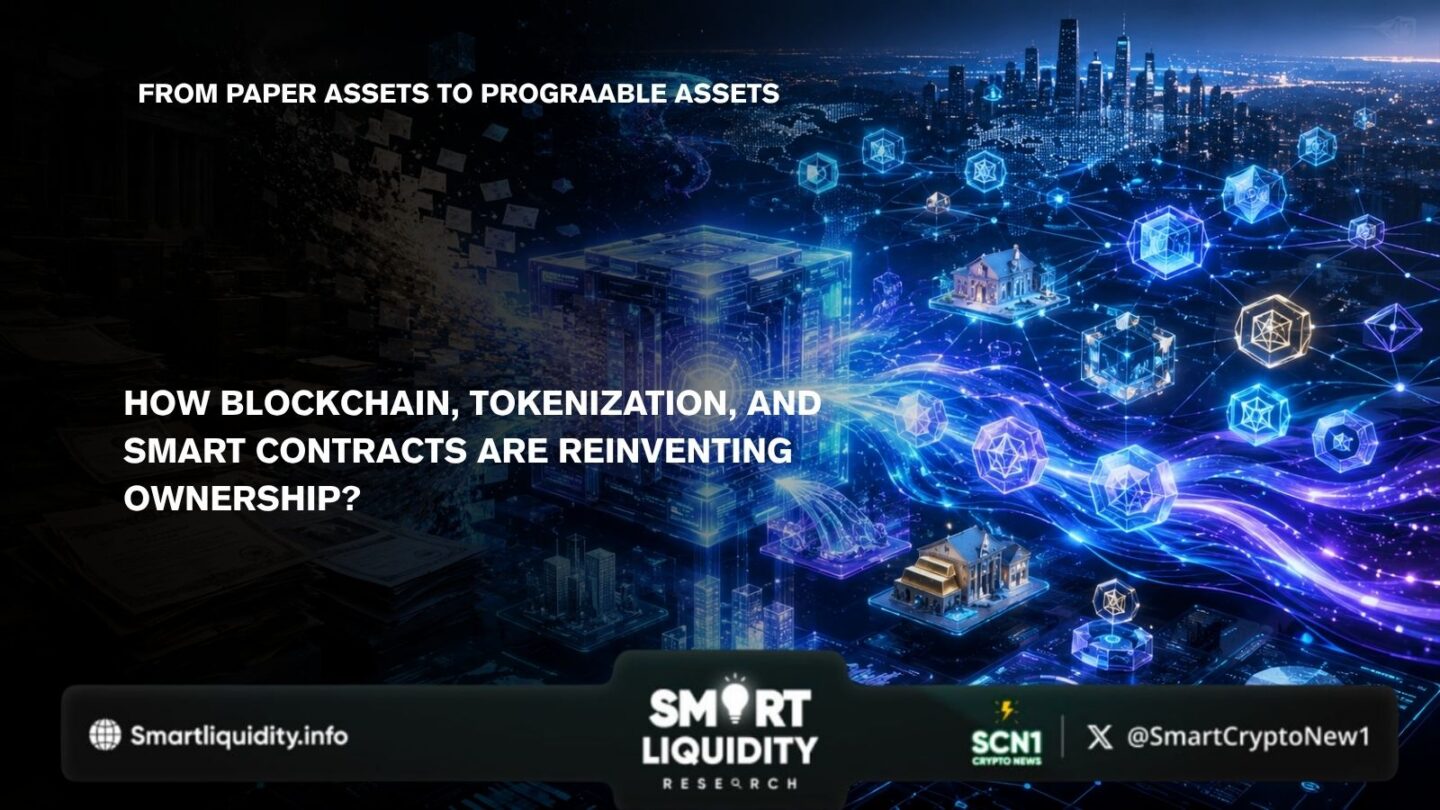
For centuries, ownership has been documented through paper-based systems. Stocks were represented by physical certificates, property rights were recorded in filing cabinets, bonds existed as printed documents, and contracts required signatures on paper. While these systems formed the foundation of modern finance, they were often slow, expensive, fragmented, and vulnerable to inefficiencies.
Today, a new transformation is underway. The rise of blockchain technology is enabling the shift from paper assets to programmable assets—digital assets that can carry ownership rights while also executing predefined rules automatically. This evolution has the potential to reshape financial markets, improve transparency, and unlock entirely new forms of economic activity.
As the world moves toward a more connected and automated financial system, programmable assets may become one of the most important innovations of the digital economy.
What Are Paper Assets?
Paper assets refer to traditional financial and legal instruments whose ownership is documented through physical or centralized records. Examples include:
- Stock certificates
- Bonds
- Real estate titles
- Insurance contracts
- Commercial agreements
- Government-issued securities
Although most modern institutions have digitized their recordkeeping, the underlying infrastructure remains heavily dependent on centralized databases, intermediaries, manual verification processes, and legal paperwork.
These systems often require:
- Multiple intermediaries
- Lengthy settlement periods
- High administrative costs
- Jurisdiction-specific procedures
- Significant trust in centralized institutions
While functional, they were designed for an era before global digital networks existed.
The Emergence of Programmable Assets
Programmable assets are digital representations of value or ownership that exist on blockchain networks and contain embedded logic through smart contracts.
Unlike traditional assets, programmable assets do not simply record ownership. They can also perform actions automatically when specific conditions are met.
For example:
- A bond can automatically distribute interest payments.
- A rental property token can automatically distribute income to investors.
- Insurance payouts can be triggered automatically by verified events.
- Tokenized securities can settle instantly upon trade execution.
In essence, programmable assets combine ownership and automation into a single digital object.
Why Programmability Matters
The key innovation is not digitization itself—it is automation.
Traditional financial assets require institutions to process transactions, validate ownership changes, manage distributions, and enforce agreements.
Programmable assets can execute many of these functions directly through code.
This creates several advantages:
Faster Settlement
Traditional securities often settle within one to three business days.
Blockchain-based programmable assets can settle within minutes or even seconds, reducing counterparty risk and freeing up capital.
Reduced Operational Costs
Automation eliminates many repetitive administrative tasks, reducing costs for issuers, investors, custodians, and financial institutions.
Greater Transparency
Every transaction can be recorded on a transparent ledger, allowing participants to verify ownership histories and asset movements.
Enhanced Accessibility
Programmable assets can lower investment minimums, allowing broader participation in markets previously restricted to large institutions.
Continuous Operation
Unlike traditional financial markets that operate within specific hours, blockchain networks can function twenty-four hours a day, seven days a week.
Tokenization: The Bridge Between Physical and Digital Assets
Tokenization is the process of converting ownership rights into blockchain-based tokens.
Virtually any asset can potentially be tokenized, including:
- Real estate
- Stocks
- Bonds
- Commodities
- Intellectual property
- Art collections
- Private equity
- Infrastructure investments
Each token represents a share of ownership, while smart contracts govern how those ownership rights are managed.
This allows traditionally illiquid assets to become more transferable, divisible, and accessible.
For example, a commercial building worth $10 million could be divided into one million digital tokens, allowing investors to own small fractions of the property rather than purchasing the entire asset.
The Rise of Real-World Assets (RWAs)
One of the fastest-growing sectors in blockchain today is the tokenization of real-world assets.
Governments, banks, asset managers, and fintech firms are increasingly exploring ways to bring traditional assets onto blockchain infrastructure.
The appeal is clear:
- Improved efficiency
- Lower costs
- Faster settlement
- Enhanced transparency
- Global investor access
Tokenized treasury bills, corporate bonds, private credit markets, and real estate products are already demonstrating how programmable assets can bridge traditional finance and decentralized finance.
As regulatory frameworks mature, this sector may become one of the largest drivers of blockchain adoption.
Beyond Finance: A New Ownership Layer for the Internet
The impact of programmable assets extends beyond financial markets.
Future applications may include:
Intellectual Property
Creators could receive royalties automatically whenever their content is used or sold.
Supply Chains
Ownership and movement of goods could be tracked and verified in real time.
Digital Identity
Individuals could control and selectively share verified credentials.
Gaming and Virtual Economies
Players could truly own digital assets and transfer them across platforms.
Infrastructure Networks
Energy grids, telecommunications systems, and transportation networks could use programmable assets to coordinate resources automatically.
In each case, ownership becomes dynamic rather than static.
Challenges Ahead
Despite their promise, programmable assets face important challenges.
Regulatory Uncertainty
Governments continue to develop rules regarding digital asset issuance, trading, and custody.
Technical Risks
Smart contract vulnerabilities and coding errors can create security concerns.
Interoperability
Different blockchain ecosystems must communicate effectively to support global adoption.
Institutional Adoption
Large organizations often require extensive compliance, governance, and risk-management frameworks before implementing new technologies.
Addressing these challenges will be critical for long-term success.
The Future of Asset Ownership
The transition from paper assets to programmable assets represents more than a technological upgrade—it reflects a fundamental shift in how ownership is created, transferred, and managed.
Just as the internet transformed communication by digitizing information, blockchain technology is transforming ownership by digitizing value and embedding rules directly into assets themselves.
In the coming decade, investors may own fractions of real estate through tokens, receive automated income distributions from tokenized bonds, and interact with financial products that operate continuously without traditional intermediaries.
The result could be a more efficient, transparent, and accessible financial system where assets are not merely recorded digitally but become intelligent participants in the economy.
Conclusion
The journey from paper assets to programmable assets marks the next stage in the evolution of finance and ownership. By combining digital representation with automated execution, programmable assets have the potential to unlock unprecedented efficiency, accessibility, and innovation across global markets.
While challenges remain, the momentum behind tokenization, smart contracts, and blockchain infrastructure suggests that the future of ownership will be increasingly digital, automated, and programmable. As this transformation unfolds, programmable assets may become the foundation upon which the next generation of financial systems is built.